Loading
Our Story
The warmth of the sun in the winter
Street and gym wear for people looking for the good through hardship. Everything here — the palette, the symbols, the decision to print on the back — comes out of a single word, and the word is worth sitting with before anything else.
The definition of apricity
From the dictionary
- apricity
uh-PRISS-i-teenoun
The warmth of the sun in winter.
From the Latin apricus — exposed to the sun. Recorded in English in the seventeenth century, and barely used since.
Chapter I — The word itself
A word for one exact thing
Apricity names one small, exact thing. Not the sun. Not the season. The warmth of the sun in winter, and only the kind you feel while the air around you is still cold.
The language managed without it for four hundred years, which tells you how specific it is. It surfaces in seventeenth-century English, off the Latin apricus — exposed to the sun — and then it falls almost entirely out of use. Nobody reaches for a word like that by accident.
It is eight words long as a definition, and it is the whole brand. Everything after this is an attempt to make clothes that deserve it.
Chapter II — Why that word
Light emerging from black
Warmth is only remarkable against cold. That is the entire reason for this word and not a warmer, easier one.
A brand that talks about light without acknowledging the dark is selling a mood, and moods wear off. Apricity is not a mood. It is a measurement taken in difficult conditions — light that has to emerge from black before it means anything at all.
So the ground stays dark. Washed charcoals, acid-wash blacks, an umber warm enough to notice, one break for cream. Gold is rare on purpose: the eye and the sun on the back of the Oversized Logo Tee, and then it stops. When everything glows, nothing does.
That is the thesis behind every decision that follows — the palette, the pace, the fact that nothing here raises its voice.

Chapter III — What it means to wear it
Made for the long winter
Street and gym wear for people looking for the good through hardship. That is the plainest way to say it.
There is a version of this category that yells encouragement at people who are already doing the work. It assumes you are short on intensity. Most people are not. What runs out first is the reason to keep going — the kind you can hold all day without it costing you anything.
So these are made for the ordinary cold stretch. The training block nobody is watching. The year that is mostly maintenance. The good is still there; it is just quieter than the difficulty, and the whole point is to keep noticing it.
Confidence and comfort in one garment is not a compromise here, it is the brief. Heavyweight cotton, cuts that hang properly, nothing that needs adjusting through the day. The shirt should represent you well and then get out of the way.
Chapter IV — The vocabulary
Four symbols, one idea
Four images recur across the 1st Collection. They are not decoration and they are not a theme. Each one holds down a different part of the same idea, and read in order they make a sentence: shed what has stopped fitting, lead without volume, come up out of the weather, keep the warmth in view.
 Browse Snake
The Snake
Sheds what it has outgrown.
Coiled through white roses on washed slate blue. The moult is the point, not the menace — leaving something behind is growth, and things come up out of cold ground.
 Browse Lion
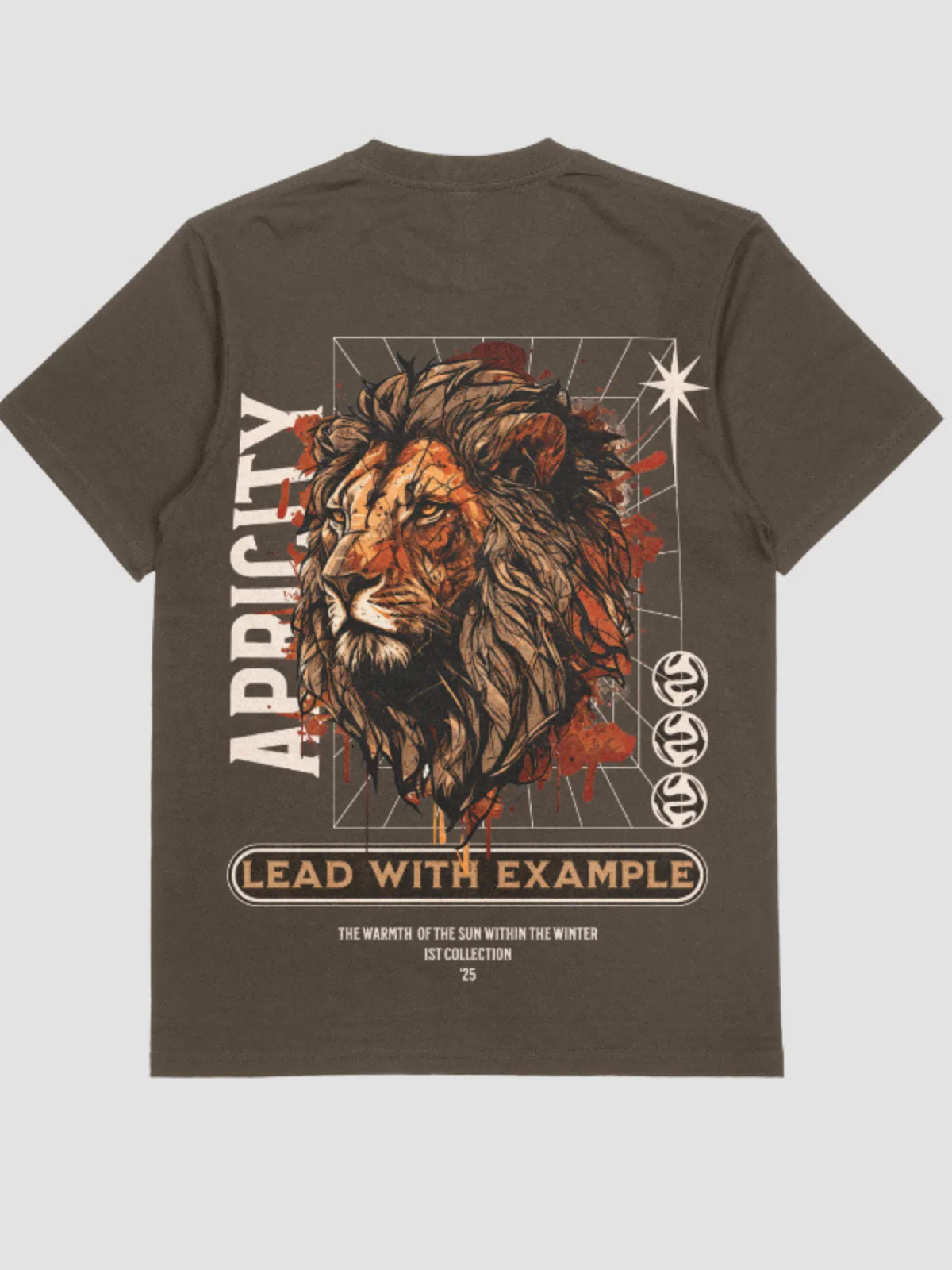
The Lion
Leads by example, not by volume.
Held inside a drawn frame with the banner reading LEAD WITH EXAMPLE. Courage that has to announce itself is usually performing. On the warmest body in the line.
- Browse Angel
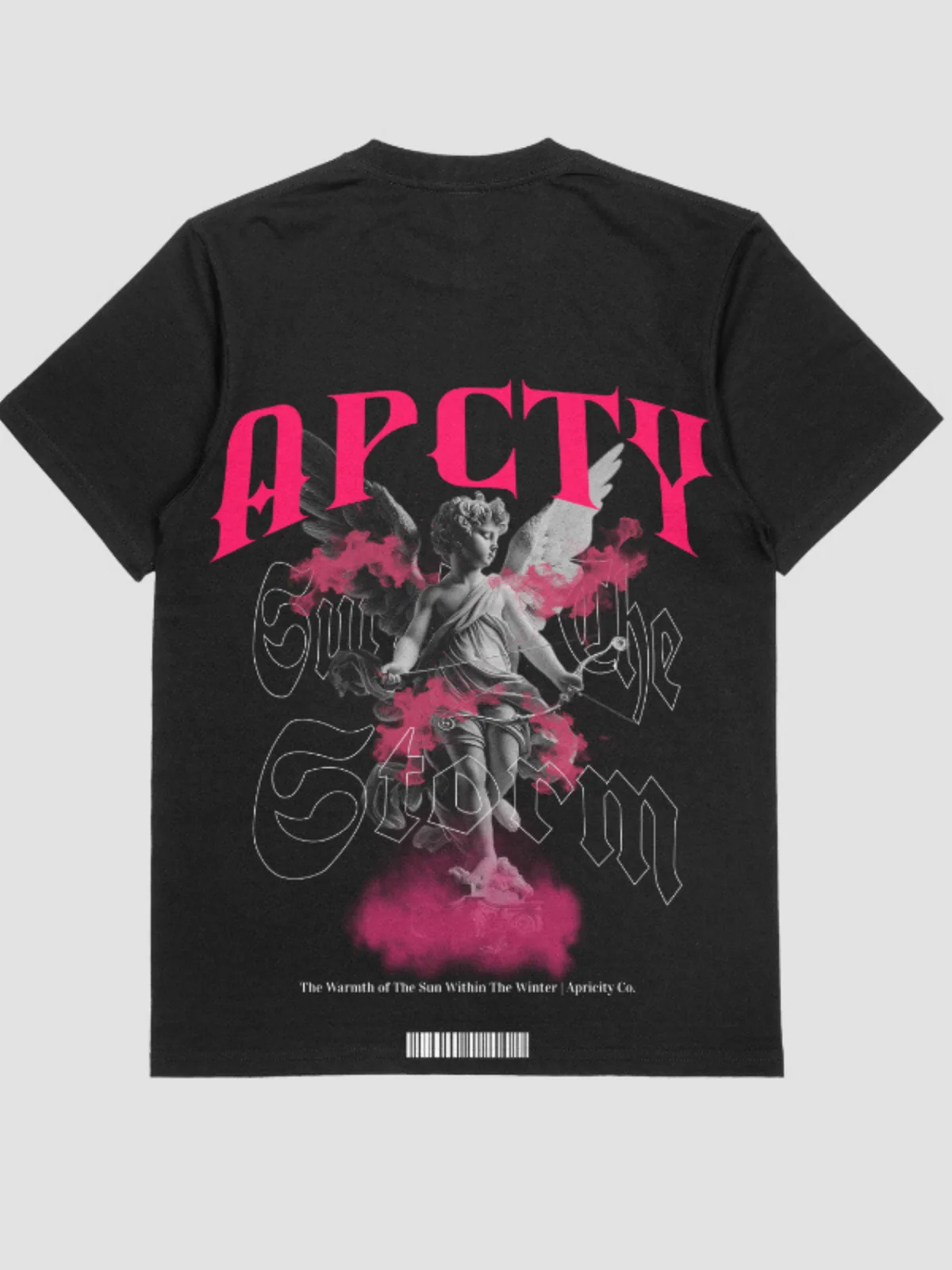
The Angel
Rises out of the storm.
A classical statue inside a pink cloud, with Out of the Storm in outlined script. The weather is still in the picture. It is under the figure rather than over it.
- Browse Eye & Sun
The Eye & Sun
The warmth that keeps watch.
The mark itself, in gold. An eye that watches is usually a warning. This one has the sun at its centre, so it reads the other way: attention that is on your side.
Chapter V — Back prints
The message is for the person behind you
Every hero graphic in this line is printed between the shoulder blades. The fronts are clean, or close to it. That is not a layout habit; it is the argument.
A chest print is a billboard. It sits in the space between two people having a conversation and takes a turn in that conversation whether or not you wanted it to. A back print goes out to the room you have already walked through — the person behind you in the queue, the row behind you on the bus.
It also means you cannot see it. You carry it on trust: you chose it, you know it is there, and then you spend the whole day not looking at it. That is closer to something you know about yourself than something you are announcing.
Quiet from the front, considered from the back. It is a fairly precise description of the whole thing.
Where it starts
The 1st Collection
All of this was worked out on the first run: the back prints, the four symbols, the dark ground with one narrow seam of gold running through it. It is the shortest way to understand what the word means in cotton.
More on the word, the symbols and the back prints in the Journal.